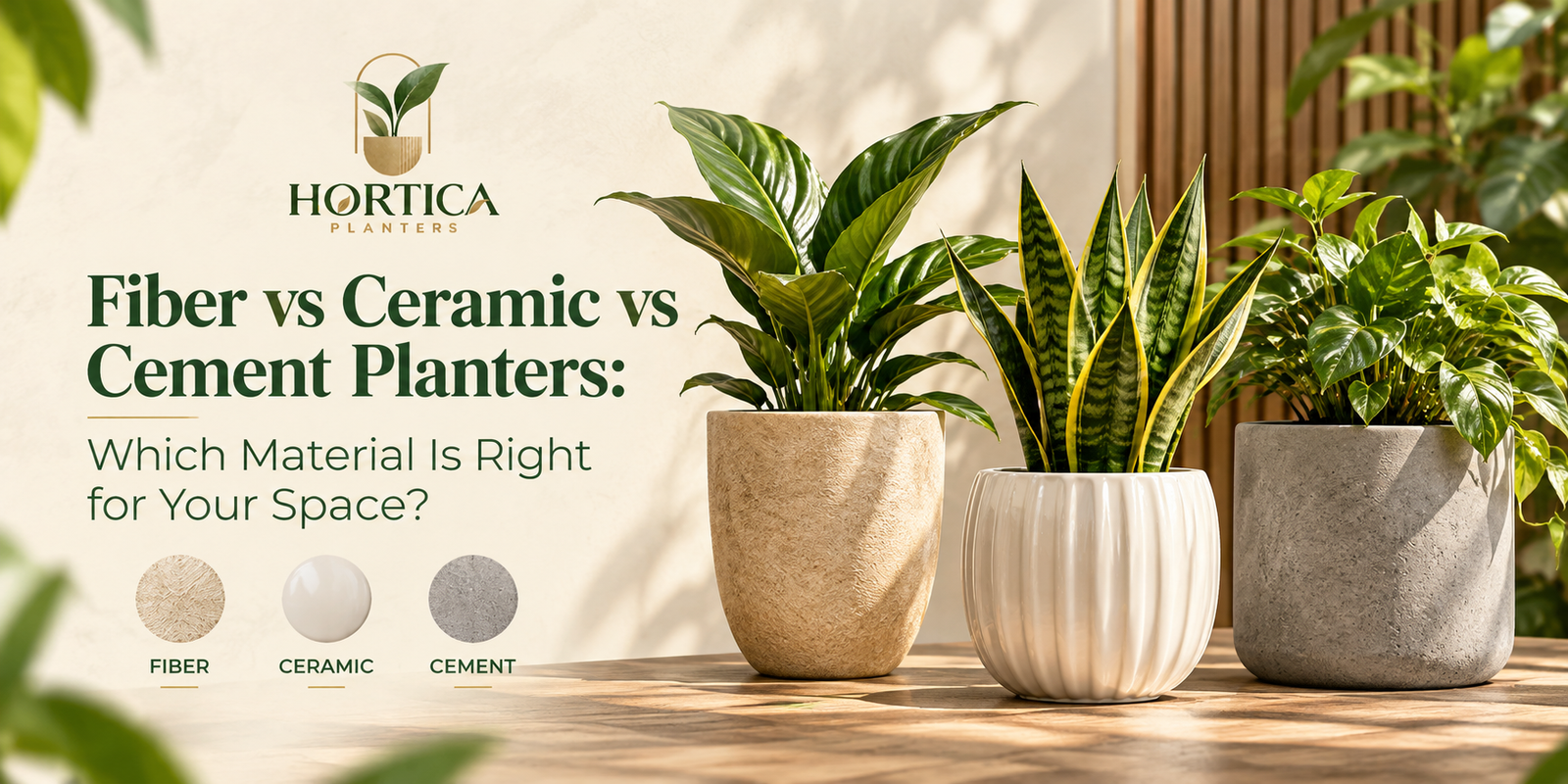
Fiber vs Ceramic vs Cement Planters: Which Material Is Right for Your Space?
Choosing the right planter is about more than selecting a shape or color. Compare weight, durability, aesthetics, and suitability for your indoor and outdoor projects.
Choosing the right planter is about more than selecting a shape or color. The material of a planter can affect its weight, durability, appearance, maintenance, portability, and suitability for indoor or outdoor spaces.
Among the most popular choices are fiber planters, ceramic planters, and cement planters. Each material has its own characteristics, making it suitable for different applications.
If you are choosing planters for your home, office, hotel, restaurant, landscape project, or commercial space, understanding these differences can help you make a more informed decision.
Why Planter Material Matters
A planter is both a functional product and an important part of a space’s visual design. The right planter material should work seamlessly with your project’s environmental conditions, scale, and budget.
1. Fiber Planters
Widely used for residential, commercial, and hospitality spaces due to extreme design flexibility, lightweight construction, and custom sizing possibilities.
- Lightweight & easy to position
- Endless shapes & contemporary profiles
- Ideal for large statement pieces
- Fully customizable finishes
2. Ceramic Planters
Renowned for a refined appearance, glazed textures, and a polished aesthetic that brings elegance to traditional or decorative indoor spaces.
- Attractive decorative glazes
- Rich variety of colors/patterns
- Best for indoor tabletops & corners
- Heavier and more fragile to impact
3. Cement Planters
Synonymous with strength, substantial weight, and an industrial architectural aesthetic. Perfect where heavy ground stability is essential.
- High weight and robust stability
- Strong architectural presence
- Great for outdoor landscaping
- Requires heavy lifting equipment
Fiber vs Ceramic vs Cement: Quick Comparison
Review how each material stacks up across key architectural and functional metrics:
| Feature | Fiber | Ceramic | Cement |
|---|---|---|---|
| Weight | Generally lightweight | Medium to heavy | Heavy |
| Design Flexibility | High | High | Moderate |
| Large-Format Designs | Excellent | More limited | Excellent |
| Customization | Excellent | Depends on production | Moderate |
| Portability | Easier | Moderate | Difficult |
| Architectural & Commercial | Excellent | Good | Excellent |
| Outdoor Suitability | Suitable (with construction) | Depends on conditions | Yes |
Which Planter Material Should You Choose?
Choose Fiber If:
You want large architectural statement planters, lightweight mobility, exact custom dimensions, complex geometric shapes, or are outfitting commercial/hospitality venues.
Choose Ceramic If:
Your primary goal is refined decorative appeal, you need smaller or medium plant arrangements, and the display is strictly intended for indoor settings.
Choose Cement If:
You require heavy structural weight for wind stability, concrete raw aesthetics, or permanent outdoor landscaping placements.
Custom Fiber Planters for Unique Projects
Sometimes standard retail products do not match your precise architectural blueprints. Whether you need a specific width, height, curvature, color, or texture, custom manufacturing bridges the gap.
At Hortica Planters, fiber and resin engineering form the core of our manufacturing capabilities. We craft custom planters and decor tailored precisely to your design vision.