Why Fiber Planters Are a Popular Choice for Modern Architecture and Interior Design
Modern architecture increasingly focuses on clean lines, functional spaces, natural elements, and carefully selected statement pieces. Discover why fiber planters are leading this design evolution.
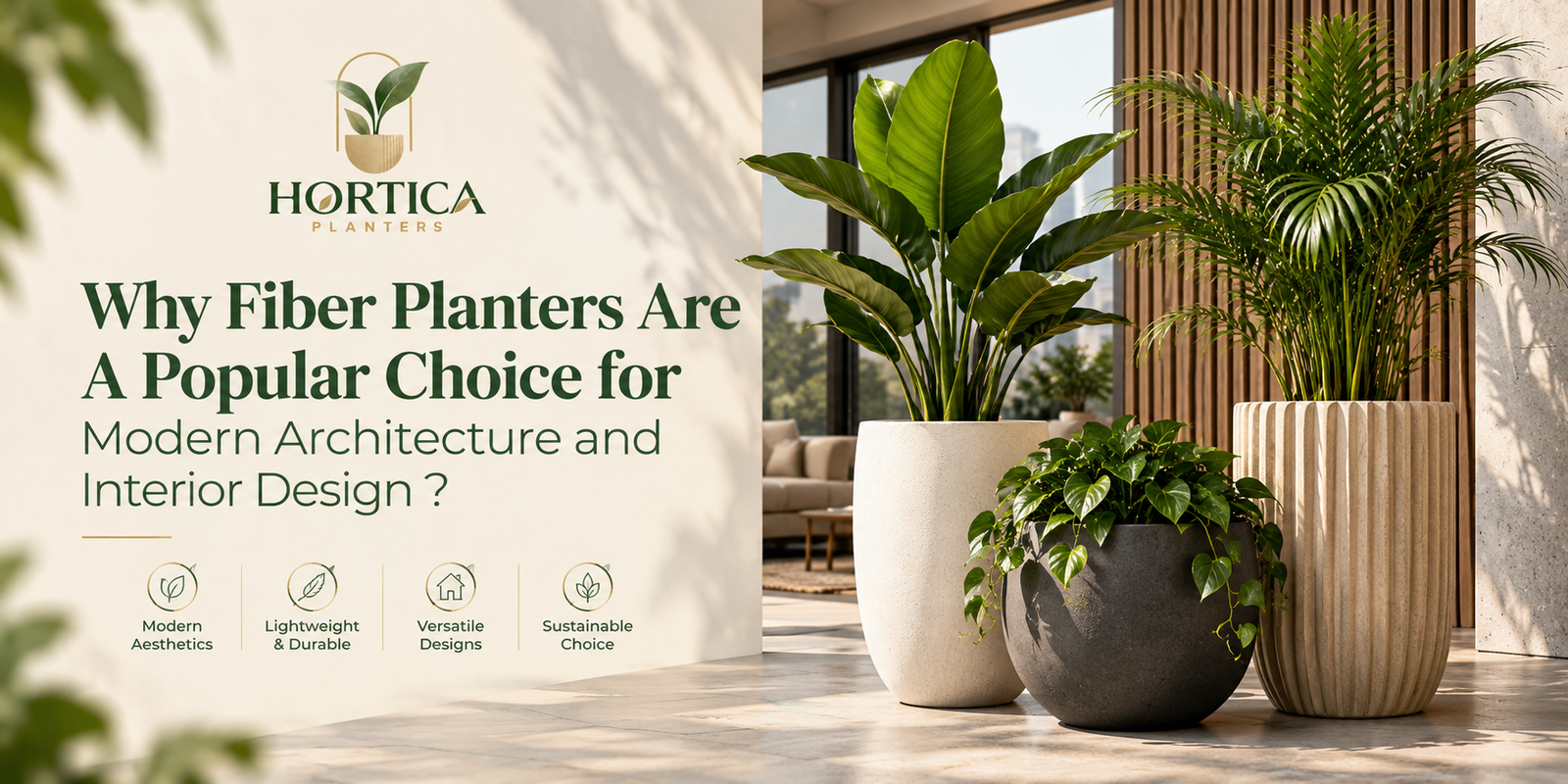
Modern architecture increasingly focuses on clean lines, functional spaces, natural elements, and carefully selected statement pieces.
Plants play an important role in this approach, but the planter itself also matters.
A beautifully selected planter can become part of the architecture rather than simply serving as a container for a plant.
This is where fiber planters offer significant design flexibility.
From residential interiors to hotel lobbies, office buildings, restaurants, retail spaces, and landscaped commercial projects, fiber planters can provide a combination of visual impact, versatility, and customization.
What Are Fiber Planters?
Fiber planters are manufactured using fiber-based materials and resin systems that can be formed into different shapes and designs.
The manufacturing process allows designers and manufacturers to create products ranging from simple contemporary forms to large architectural statement planters.
Depending on their construction and finish, fiber planters can be designed for a variety of indoor and outdoor applications.
Why Are Fiber Planters Popular?
The popularity of fiber planters comes largely from their combination of design flexibility and practical versatility.
Here are some of the characteristics that make them suitable for modern spaces.
1. Design Flexibility
One of the strongest advantages of fiber is the ability to create different forms. Manufacturers can produce:
This flexibility makes fiber particularly suitable for contemporary interiors and modern architecture.
2. Large Statement Planters
Large spaces often need large design elements. A small planter can disappear inside a large lobby or entrance, while an appropriately scaled statement planter can become a major focal point.
Large fiber planters can be developed in substantial dimensions while offering a practical alternative to some heavier planter materials.
They can be used in:
3. Lightweight Advantages
Fiber construction provides a lighter alternative for large-format applications, making transportation, positioning, and installation much easier where excessive weight is undesirable.
4. Customization
Custom fiber planters can be developed around a project’s exact architecture, matching height, width, shape, color, and finish instead of forcing projects to fit standard items.
5. Modern Finishes
Coordinated with wall colors, furniture, flooring, and architectural materials through diverse colors, textures, and surface treatments to become part of the design language.
Fiber Planters in Interior Design
Indoor plants can soften spaces dominated by glass, metal, concrete, and other hard surfaces. A well-designed planter adds another layer to the interior.
Living Spaces
Create focal points in living rooms, entrances, staircases, open-plan spaces, and double-height areas.
Offices
Introduce natural elements into reception areas, meeting rooms, waiting zones, and visually divide open workspaces.
Hotels
Complement lobby furniture, reception desks, and lounge areas with large decorative statement planters.
Restaurants
Define zones, separate dining sections, outdoor seating, and private dining spaces elegantly.
Fiber Planters in Architecture and Landscaping
The role of planters extends beyond interiors. In architectural landscaping, large planters can be used to frame entrances, guide movement, and create visual boundaries.
They can be incorporated into commercial landscapes, office buildings, hotels, restaurants, rooftops, terraces, patios, and residential developments—becoming part of the landscape design rather than an isolated object.
Fiber Planters vs. Traditional Heavy Materials
Cement provides substantial weight and ceramic offers refined finishes, but fiber provides a powerful combination for modern projects:
The right choice ultimately depends on the specific requirements of your project.
“A 1.5-meter planter in a specific shape and finish to match an entrance.”
Rather than selecting the closest available product, a custom manufacturer can develop a planter around the project’s requirements. This is especially valuable for interior designers, architects, landscape designers, hospitality businesses, retailers, wholesalers, and commercial developers.
Hortica Planters: Fiber & Resin Manufacturing Expertise
At Hortica Planters, fiber and resin are at the heart of our manufacturing expertise.
We manufacture planters and décor products in Pakistan, with planters remaining our core product category. Our capabilities allow us to develop products in custom sizes, colors, shapes, designs, and finishes.
100+
Planter Variations5,000+
Planters SoldWorldwide
Global SupplyOur vision is to bring Pakistani manufacturing and design capability to customers and businesses worldwide.